
Every year, thousands of people pack up and relocate to Chicago for all kinds of reasons: a new job, cheaper rent than San Francisco or New York, the food scene, or just that gut feeling that it’s time for something different. Whatever brought you here, this Chicago relocation guide breaks down what you actually need to know before making the move. We’re talking neighborhoods, costs, getting around, the job market, and yes, the winters.
Why People Relocate to Chicago
Chicago is the third largest city in the United States, with about 2.7 million people within the city limits and around 9.4 million across the greater metro area. But those numbers don’t really capture what makes it different. Chicago feels less like one giant city and more like dozens of smaller neighborhoods stitched together, each with its own personality, housing stock, and local culture.
So why Chicago over, say, Austin or Denver or one of the other cities everyone’s been moving to? The biggest reason we hear from our clients is affordability. The median home price in the Chicago area sits around $362,500 as of early 2026. Compare that to what you’d pay in Los Angeles or San Francisco, and it’s not even close.
But it’s not just about the price tag. Chicago has an energy that’s hard to explain until you’ve spent a weekend here. You’ve got professional sports year-round, museums that rival anything in New York, a food scene that goes way beyond deep-dish pizza (though you should absolutely try that too), and a public transit system run by the Chicago Transit Authority (CTA) that actually works. Plenty of residents here don’t own a car at all.
Chicago’s Cost of Living Compared to the National Average
One of the first questions people ask when considering a Chicago relocation is how much it actually costs to live here. Overall, Chicago’s cost of living runs about 18 percent higher than the national average, with housing doing most of the work at roughly 44 percent above the typical U.S. city. That said, compared to other big-city markets, Chicago is often considered an affordable alternative.
Housing Costs
Housing is the biggest driver of Chicago’s cost premium. Buying or renting, you’ll pay more than the national average, but way less than New York or San Francisco. The median home price in the city proper was around $362,500 as of early 2026, and the broader metro area median sits closer to $375,000.
Groceries, Transportation, and Healthcare
Groceries will cost you about 5 to 8 percent more than the national average. Not dramatic, but you’ll notice it. Transportation costs (CTA fares, gas) run about 4 percent higher, and healthcare is roughly 10 to 12 percent above average. On the plus side, utility prices in Chicago actually come in about 5 percent lower than the national average, which helps offset some of those other costs.
How Chicago Compares to Other Big Cities
To put that in perspective: New York City’s cost of living is roughly 75 percent above the national average. Boston is about 48 percent higher. Los Angeles comes in around 50 percent above. Chicago’s 18 percent premium looks pretty reasonable next to those numbers, which is a big part of why so many people are choosing to relocate here.
Chicago Neighborhoods: Finding the Right Fit
You’ll hear people call Chicago a “city of neighborhoods,” and that’s not just a marketing line. The city has 77 community areas containing more than 200 individual neighborhoods, and they really do feel different from each other. Where you live here affects everything: your commute, whether you need a car, what restaurants are on your corner, and what your block feels like on a Saturday morning.
Here’s a closer look at the neighborhoods we work in most and what makes each one worth considering.
Lincoln Park
Lincoln Park is one of Chicago’s most sought-after neighborhoods, stretching along the lakefront on the North Side. It’s home to Lincoln Park Zoo, the Peggy Notebaert Nature Museum, and the neighborhood’s namesake park, one of the largest urban parks in the country. The housing stock ranges from vintage brownstones and classic Chicago two-flats to newer luxury condos and single-family homes. Lincoln Park offers excellent walkability, strong transit connections on the Brown and Red Lines, and easy access to the lakefront trail.
Lakeview
Just north of Lincoln Park, Lakeview is one of the North Side’s most popular neighborhoods for both buyers and renters. It includes well-known sub-neighborhoods like Wrigleyville (home of the Chicago Cubs at Wrigley Field) and the Southport Corridor, which is lined with boutique shops and restaurants. Lakeview offers a mix of vintage condos, walk-up apartments, and single-family homes at price points slightly below Lincoln Park.
Roscoe Village
Roscoe Village is one of those neighborhoods that surprises people. It’s tucked between Lakeview and North Center, and it has this quiet, tree-lined feel that doesn’t seem like it should exist this close to downtown. The strip along Roscoe Street has independent coffee shops, restaurants, and boutiques. Housing here leans toward single-family homes, two-flats, and smaller condo buildings, which makes it a natural fit for buyers who want more space without leaving the city.
North Center
North Center flies under the radar, and the people who live there tend to like it that way. It borders Roscoe Village and Lincoln Square, and it’s got tree-lined streets, excellent Brown Line access, and a growing restaurant scene along Lincoln and Western Avenues. Buyers who want a quieter pace and a bit more elbow room without sacrificing transit access tend to land here.
Bucktown and Wicker Park
Bucktown and Wicker Park are where Chicago’s creative side shows up. They sit just northwest of downtown, and the energy here is totally different from the North Side neighborhoods. Wicker Park centers around the six-corners intersection at Milwaukee, Damen, and North, and the restaurant and bar scene is always evolving. Housing runs the gamut: converted lofts, modern condos, historic greystones. The Blue Line and multiple bus routes keep you connected.
Lincoln Square
Lincoln Square is a North Side neighborhood with a distinct European-influenced character, anchored by a walkable commercial district along Lincoln Avenue. You’ll find the Old Town School of Folk Music, the Davis Theater, and a collection of German-inspired bakeries and beer halls. Housing tends to be more affordable than Lincoln Park or Lakeview, with a mix of brick bungalows, two-flats, and mid-rise condos.
Logan Square
Logan Square has undergone significant change over the past decade, transforming into one of the city’s most talked-about neighborhoods. It’s centered around the historic Logan Square boulevard system, and the area is packed with acclaimed restaurants, craft breweries, and independent shops. The Blue Line provides a direct connection to the Loop, and housing options include everything from vintage two-flats to new-construction townhomes.
Other Neighborhoods Worth Knowing
Our team focuses on Chicago’s North Side but here’s a quick lay of the land for the rest of the city. The South Loop puts you right next to Grant Park, Millennium Park, and the Museum Campus. River North is the downtown-adjacent neighborhood with galleries, dining, and high-rise living. Hyde Park, over on the South Side, is home to the University of Chicago and has an academic, community-oriented feel that’s unlike anywhere else in the city. And then you’ve got neighborhoods like Rogers Park and the Gold Coast sitting at completely opposite ends of the price spectrum.
On a tighter budget? Pilsen and Rogers Park are worth a look. Both tend to run more affordable than the Loop or River North, and they’re popular landing spots for people just getting into the Chicago area housing market who don’t want to blow their entire paycheck on rent or a mortgage.
Chicago’s Job Market and Major Industries
Jobs are a huge part of why people end up here. The Chicago metro area employs close to 4.8 million workers, making it the largest employment center in the Midwest. And the job market isn’t dominated by any single industry the way some cities are. You’ll find major opportunities in finance and insurance, healthcare, tech, manufacturing, professional services, and retail trade.
Key Employers and Industries
The city is home to dozens of Fortune 500 headquarters. McDonald’s is here. Boeing moved its headquarters to the Chicago area. United Airlines, Allstate, Exelon, Motorola Solutions, and Hyatt Hotels all call Chicago home. The financial services sector is anchored by the Chicago Mercantile Exchange and the Chicago Board of Trade, and the tech sector has been growing steadily, with companies continuing to invest in the city.
Healthcare is another major employment driver, with institutions like Northwestern Medicine, Rush University Medical Center, and the University of Chicago Medical Center employing tens of thousands of workers across the region.
Growth Sectors
Looking ahead, Chicago’s fastest-growing job categories are concentrated in healthcare support, technology, logistics, and professional services. The city has also become a hub for fintech, biotechnology, and e-commerce companies. Chicago 2050, a long-range economic development plan, has identified future-facing industries including AI, clean technology, advanced logistics, and life sciences as key growth areas.
Unemployment and Wages
As of early 2026, unemployment in the Chicago metro area hovers around 4.1 percent, which is roughly in line with the national average. Wages are competitive too. New hires in construction, finance, and hospitality here tend to out-earn workers in the same roles in most other metro areas.
Public Transportation and Getting Around
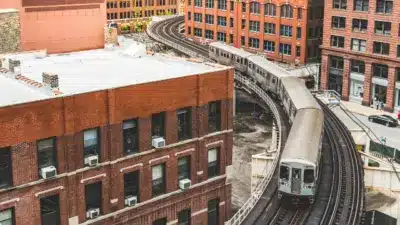
If you’re coming from a city where you drove everywhere, Chicago’s public transportation might be the biggest quality-of-life upgrade you didn’t know you needed. The CTA operates the “L” train system with eight rail lines, 146 stations, and about 127 bus routes. The system handles over 319 million rides a year, and it’s one of the largest public transit networks in the country.
The “L” Train
The “L” is short for “elevated,” though a lot of the system actually runs at grade or underground now. It’s the backbone of how people get around. The Red Line and Blue Line run 24 hours a day, which makes Chicago one of only a handful of cities in the world with round-the-clock rail service. That matters at 1 a.m. on a Saturday. The Brown Line covers most of the North Side neighborhoods we work in: Lincoln Park, Lakeview, Roscoe Village, North Center, and Lincoln Square. The Blue Line connects Logan Square, Wicker Park, and Bucktown to the Loop and O’Hare Airport.
Metra and Regional Rail
Metra is the commuter rail system, and it’s worth knowing about even if you’re living in the city. It runs 11 lines radiating out from downtown, which means you can easily get to suburban communities for weekend trips or, if you end up working in the suburbs, commute in reverse.
Biking, Driving, and Rideshare
Chicago is also one of the most bike-friendly big cities in the country, with over 500 miles of bikeways, including protected and buffered bike lanes. The Divvy bike-share system offers thousands of bikes and e-bikes at stations throughout the city. If you do bring a personal vehicle, be prepared for city driving challenges including rush hour traffic, parking permits (which are required in many residential neighborhoods and cost $50 to $150 per year), and winter snow removal regulations.
Chicago Weather: What New Residents Need to Know

Okay, let’s get this out of the way: Chicago’s weather. Yes, the Windy City lives up to its reputation in more ways than one. Chicago has four distinct seasons, and each one brings a dramatically different experience.
Cold Winters
Winters here mean below-freezing temperatures and lake-effect snow. January averages hover around 26°F (-3°C), and cold snaps can push temps well below zero. The wind chill off Lake Michigan is no joke. Snow removal becomes part of your routine. The city plows the main streets, but you’re on your own for digging out your car and shoveling your sidewalk.
Warm Summers
Then summer hits, and the whole city transforms. Temperatures range from 78°F to 92°F (26°C to 33°C) between June and August, and suddenly every neighborhood has a street fair, every rooftop has a bar, and the beaches along Lake Michigan are packed. Ask anyone who lives here what makes the winters worth it, and they’ll point to summer.
Spring and Fall
Spring and fall are the shoulder seasons, and a lot of Chicago residents consider them the best time of year. Spring brings baseball season and the slow thaw of the city waking back up. Fall means changing foliage, cool evenings, and perfect weather for exploring the lakefront trail or hitting up an outdoor market.
Seasonal Living in Chicago
Chicago experiences four distinct seasons, and each significantly affects lifestyle and activities throughout the year. Smart residents learn to embrace the rhythm: ice skating and holiday markets in winter, beach volleyball and outdoor concerts in summer, apple picking in fall, and patio season returning every spring. Dressing in layers and investing in quality cold-weather gear is essential for making the most of Chicago living year-round.
Cultural Attractions and Things to Do

Chicago is a city with a deep bench of cultural attractions that make it one of the most exciting places to live in the country. Art, music, sports, food: pick your thing and Chicago probably does it better than wherever you’re coming from.
World-Class Museums
The Art Institute of Chicago regularly ranks among the best museums in the world. The Museum of Science and Industry in Hyde Park is the largest science museum in the Western Hemisphere, and it’s worth a full day by itself. The Field Museum, Shedd Aquarium, and Adler Planetarium are all clustered together on the Museum Campus near Grant Park, so you can hit all three in one trip.
Parks and the Lakefront
Grant Park and Millennium Park anchor the center of the city with green space, public art (including Cloud Gate, which everyone calls “The Bean”), and seasonal events like concerts and ice skating. The lakefront trail runs 18.5 miles along Lake Michigan, connecting parks, beaches, and harbors from one end of the city to the other. It’s one of the best urban trails in the country. And Lincoln Park, the park itself, spans over 1,200 acres with gardens, playing fields, and a free zoo.
Food and Dining
The food here deserves its own section, honestly. Yes, you need to try deep-dish pizza when you arrive. But Chicago’s food scene goes way deeper than deep-dish. Michelin-starred restaurants, neighborhood taco joints with lines around the block, legendary steakhouses, farm-to-table spots doing genuinely creative stuff. The West Loop is ground zero for the dining scene right now, but Wicker Park, Logan Square, and Lincoln Park all hold their own.
Professional Sports
Chicagoans take their sports seriously. Like, unreasonably seriously. You’ve got the Cubs and White Sox for baseball, the Bears for football, the Bulls for basketball, the Blackhawks for hockey, and the Fire for soccer. Fair warning: people will ask which baseball team you root for, and there is a wrong answer depending on which neighborhood you move to. Also, get yourself to a Cubs game at Wrigley Field. Even if you don’t care about baseball, it’s one of those Chicago experiences that just hits different.
Music and Nightlife
Chicago basically invented the blues, helped shape jazz, and has been a launchpad for indie rock for decades. Lollapalooza and Pitchfork bring in massive crowds every summer. Neighborhoods across the city offer everything from intimate cocktail bars to bustling nightlife strips.
Education Options in the Chicago Area
Chicago has a ton of schools to choose from, whether that means K-12 options for your household or universities for your own career.
Public and Private Schools
Chicago Public Schools (CPS) is one of the largest school districts in the country, with over 316,000 students across more than 630 schools. The system is big and complicated, but it includes some genuinely excellent options. There are traditional neighborhood schools, selective enrollment schools, magnet schools, and charter schools. The selective enrollment high schools, like Northside College Prep, Walter Payton, and Whitney Young, consistently rank among the top public high schools in Illinois.
Private and parochial school options are plentiful too. You’ll find Catholic K-8 schools operated by the Archdiocese of Chicago, independent college prep academies, and a range of other options across the city.
Higher Education
For higher education, Chicago punches well above its weight. The University of Chicago, located in Hyde Park, ranked sixth nationally in the 2025-2026 U.S. News rankings. Northwestern University, just north of the city in Evanston, tied for seventh. Both schools draw students and researchers from all over the world, and their presence shapes the neighborhoods around them.
The City Colleges of Chicago system has seven community colleges with vocational training and transfer programs. And beyond the big research universities, the area has DePaul, Loyola, UIC, and Columbia College Chicago, among others.
Hiring Chicago Moving Companies: Logistics and Costs
Now for the important part: actually planning the move. Here’s what we tell our clients to expect when hiring Chicago movers and coordinating the logistics.
Local Moving Costs
For a local move within the Chicago area, you’re typically looking at $400 to $4,000. That range depends on the size of your place, how much stuff you have, and whether your movers have to carry everything up three flights of stairs in a walk-up (which is more common here than you might think). Most Chicago moving companies charge hourly rates of $85 to $150 per mover, with a typical two-bedroom apartment move taking 4 to 6 hours.
Long-Distance Moving Costs
Coming from out of state? Long-distance moves to Chicago generally run between $2,500 and $7,000, depending on how far you’re coming and how much you’re bringing. If you’re making the cross-country trek from the West Coast, expect to pay $5,000 to $10,000 or more for a full-service move with packing and unpacking.
Tips for a Stress-Free Move
Get written estimates from at least three licensed moving companies before you commit. You want a clear picture of all the costs, including any extra charges for heavy lifting, long carry distances, or stair fees. A few things that catch newcomers off guard: you need a city sticker for your car ($72 a year) and probably a residential zone parking permit ($35 a year). If you’re moving into a high-rise, there’s usually an elevator reservation fee. And fair warning: some of Chicago’s side streets are narrow enough that large moving trucks have a tough time getting through.
Start planning your move at least 6 to 8 weeks out. Seriously, don’t wait. This gives you time for decluttering, researching, and securing necessary services. If you’re moving between May and September, book early. That’s peak season for Chicago movers, and availability gets tight fast. Prices can jump 20 to 30 percent compared to the off-season.
Local Services and Settling Into Your New City
Once you’ve got the keys and the boxes are inside, here’s the stuff you’ll want to knock out in your first week or two.
Utilities and City Services
You’ll need to set up ComEd for electricity, Peoples Gas for natural gas, and a water account through the City of Chicago. For internet, your options are usually Xfinity, RCN, or AT&T, though availability varies by neighborhood. Don’t forget the city sticker for your car (required for any vehicle registered at a Chicago address) and a zone parking permit if your neighborhood requires one.
Getting a New Illinois Driver’s License
If you’re moving from another state, Illinois law requires you to obtain an Illinois driver’s license within 90 days of establishing residency. You can visit any Illinois Secretary of State facility to complete the process.
Exploring Your New Neighborhood
One of the best parts of a Chicago relocation is discovering local services and hidden gems in your neighborhood. Whether it’s finding your go-to coffee shop, locating the nearest farmers market, or joining a neighborhood running club on the lakefront trail, getting involved locally is the fastest way to make your new city feel like home.
Why Work with a Chicago Real Estate Agent
House hunting from out of state is a whole different game. You can’t just browse Zillow and show up for a weekend of tours. Chicago’s neighborhoods each have their own pricing patterns, inventory cycles, and quirks that you really only learn by working the area. A local real estate agent who actually knows the streets you’re looking at (not just the zip code) makes a bigger difference than most people expect.
Our team at The Westhoff Group at Compass works exclusively in Chicago’s North Side neighborhoods: Lincoln Park, Lakeview, Roscoe Village, North Center, Bucktown, Wicker Park, Lincoln Square, and Logan Square. Relocating from across the country or just moving crosstown, we can help you find the right fit. Not just the right house, but the right block in the right neighborhood for how you actually want to live day to day.
Final Thoughts on Relocating to Chicago
Look, moving to a new city is stressful. No sugarcoating that. But if you’re going to do it, Chicago is one of the easier places to land. The cost of living won’t drain your savings the way coastal cities do, there are jobs across pretty much every industry, and the neighborhoods here have such distinct identities that you’ll find your spot faster than you’d expect.
And yeah, the winters are brutal. We’re not going to lie to you about that. The rest of the year more than makes up for it. Summer block parties, the lakefront, deep-dish arguments, rooftop season, neighborhood festivals every single weekend. Most people who move here end up wondering what took them so long.
Whenever you’re ready to start looking, contact Hayley Westhoff with The Westhoff Group. We live and breathe Chicago’s North Side, and helping people find the right neighborhood is what we do every day.