



How Does the Cost of Living in Chicago Compare to the National Average?
Let’s get the big question out of the way first. Living in Chicago costs about 18% more than the national average, based on 2026 cost of living data. Housing does most of that damage, running roughly 44% above the typical U.S. city.
The rest of the budget looks surprisingly normal. Utilities actually run about 6% cheaper here. Food sits around 4% above the national average, and transportation costs land about 4% higher too.
Chicago isn’t a cheap city. But it’s nowhere near coastal-city territory either.
In this post we’ll walk through what daily life in Chicago, Illinois actually costs in 2026: housing, utilities, transportation, food, and taxes, plus the salary you’d need to live comfortably here.
This guide is for anyone running the numbers, whether you’re eyeing your first home, sizing up a bigger one, or just thinking about moving to the city.
Compare Chicago to Other Major Cities
Compare Chicago with New York, San Francisco, or Boston and the math flips in your favor. Home prices here come in dramatically lower, which is a big part of why people keep relocating from the coasts.
Local pay holds its own, too. The median household income in Chicago was $77,902 in the most recent Census figures, so incomes here stack up reasonably well against what things cost.
Your Costs Depend on Lifestyle Choices
One caveat before we dig in. Every figure in this guide is an estimate, and your own total will depend on several factors and lifestyle choices. Where you choose to live matters. So does keeping a car, how often you travel, and how much you eat out.
Treat these ranges as a general starting point, then adjust for your personal preference.
Housing Costs in Chicago
Housing is the most important line in any Chicago budget. It’s also where the city differs most from cheaper parts of Illinois and the rest of the Midwest.

Buying a House or Condo in Chicago
Here’s the headline number. The typical Chicago home was valued at about $326,000 as of May 2026, up 3.5% year over year, and well-priced homes have been going under contract in around nine days.
The market has stayed competitive. Median sale prices were up 7.7% year over year in early summer 2026, one of the biggest jumps of any major U.S. metro.
Even so, that’s a fraction of what a comparable house or condo costs on the coasts, which keeps ownership within reach for a lot of Chicago residents. Just budget honestly for Illinois property taxes, which rank among the higher rates in the country.
Renting vs. Buying in Chicago
Renting is the other side of the math, and it makes the case for ownership almost by itself. Citywide, average asking prices for apartments now run close to $2,500 a month, and rent tends to climb year after year.
A mortgage on a condo or starter home locks in your housing payment instead, and every payment builds equity rather than disappearing. For plenty of people, the monthly difference between renting and owning here is smaller than they expect.
If you’re weighing the two, run both numbers for the neighborhoods you actually want. That comparison decides more moves than any citywide average does.
Utilities and Monthly Bills
Some good news: utilities in Chicago cost slightly less than the national average, about 6% lower per 2026 cost comparisons.
For a typical home, expect electricity to run roughly $170 to $190 a month at average usage. Air conditioning in summer and heat in winter will swing that bill quite a bit from season to season.
City water is billed at about $4.89 per 1,000 gallons. Water, sewer, and trash together add roughly $60 a month for a modest household.
All in, basic utilities for many households land somewhere between $150 and $250, with internet service on top of that.
Transportation Costs in Chicago
Transportation is where Chicago can save you real money, if you use the city well.


Public Transit: The CTA
The train and bus network means plenty of residents skip car ownership entirely. After the CTA’s 2026 fare increase, a bus ride costs $2.50, an ‘L’ train ride costs $2.75, and a 30-day unlimited pass runs $85.
Day passes cost $6 and 7-day passes cost $25. Even heavy transit users end up spending around $1,000 a year, a bargain next to the full cost of owning a car.
Driving and Parking
If you do keep a car, plan for more than gas and insurance. Parking is its own expense here. Some homes come with garages or deeded spots, some blocks require residential permits, and every Chicago car owner pays for an annual city sticker.
For households that can commute by train, going from two cars down to one might be the single easiest way to lower monthly expenses.
Food and Grocery Prices
Groceries in Chicago cost about 4% more than the national average. You’ll notice it at the register, but it won’t wreck a budget.
Where you shop matters more. The city’s grocery stores cover the full price spectrum, from no-frills discount grocers to full-service chains, specialty markets, and high-end options, often within the same neighborhood.
Inexpensive neighborhood restaurants are everywhere too, so eating out doesn’t have to be a splurge.
Dining out is a Chicago strength at every price point, from taquerias and tavern-style pizza to some of the best fine dining in the country. Food spending is one of the most flexible parts of a Chicago budget. It can stay modest or climb high depending on your habits.
Healthcare and Everyday Services
Two categories people forget: healthcare services in Chicago run about 16% above the national average, and everyday goods and services (think entertainment, haircuts, gym memberships) come in about 10% higher.
Taxes in Chicago, Illinois
Taxes are a real cost factor in Chicago, IL, so build them into your math early.
Illinois collects a flat state income tax of 4.95%, the same rate at every income level. Chicago doesn’t add a separate city income tax on wages.
Sales tax is the one that stings. The combined rate in Chicago is 10.25%, one of the highest of any major U.S. city.
Property taxes in Cook County also run high, so build them into the math on any home you’re considering.
The Job Market: What Chicago Pays
Cost is only half the story, because pay matters just as much. Chicago’s economy is among the most diversified in the country. Finance and business services anchor it, with healthcare, technology, manufacturing, and logistics rounding things out.
The city is home to major financial exchanges, a long list of corporate headquarters, and a tech scene that keeps growing. All of that supports strong professional salaries across many fields.
For a lot of workers, pay here stacks up well against the cost of living. That’s a big reason people keep arriving from pricier metros.
What Salary Do You Need to Live Comfortably in Chicago?
So what do you actually need to earn to live comfortably? It depends on household size, debt, and how aggressively you want to save. The research gives some useful benchmarks, though.
MIT’s Living Wage Calculator estimates a single adult with no children needs about $52,900 before taxes just to cover the basics in Cook County. For two working adults raising two children, the combined figure is about $121,000.
“Comfortable” is a higher bar than “covered.” One widely cited national analysis put the salary needed to live comfortably in Chicago at roughly $94,000, using the 50/30/20 budgeting rule.
Average Salary vs. Average Costs
Average salary levels vary a lot by industry here. Still, the city’s median household income of about $78,000 lands close to that comfort benchmark, which tells you something. Many Chicago households live well while budgeting deliberately.
How Much Do You Need a Month to Live in Chicago?
Here’s a reasonable monthly estimate for a single person living alone. Figure $1,700 to $2,300 for housing, $150 to $250 for utilities and internet, $400 to $500 for groceries, and $85 for a CTA pass, plus phone, insurance, and everyday spending.
That puts many single-person households somewhere around $3,500 to $4,500 a month, all in. Sharing a place pulls that figure down fast. A car, a bigger home, or childcare pushes it up.
How Neighborhood Choice Changes Your Budget
No citywide average can tell you what your life will cost, because prices depend so heavily on location.

Downtown and the lakefront high-rise buildings are the most expensive locations in the city.
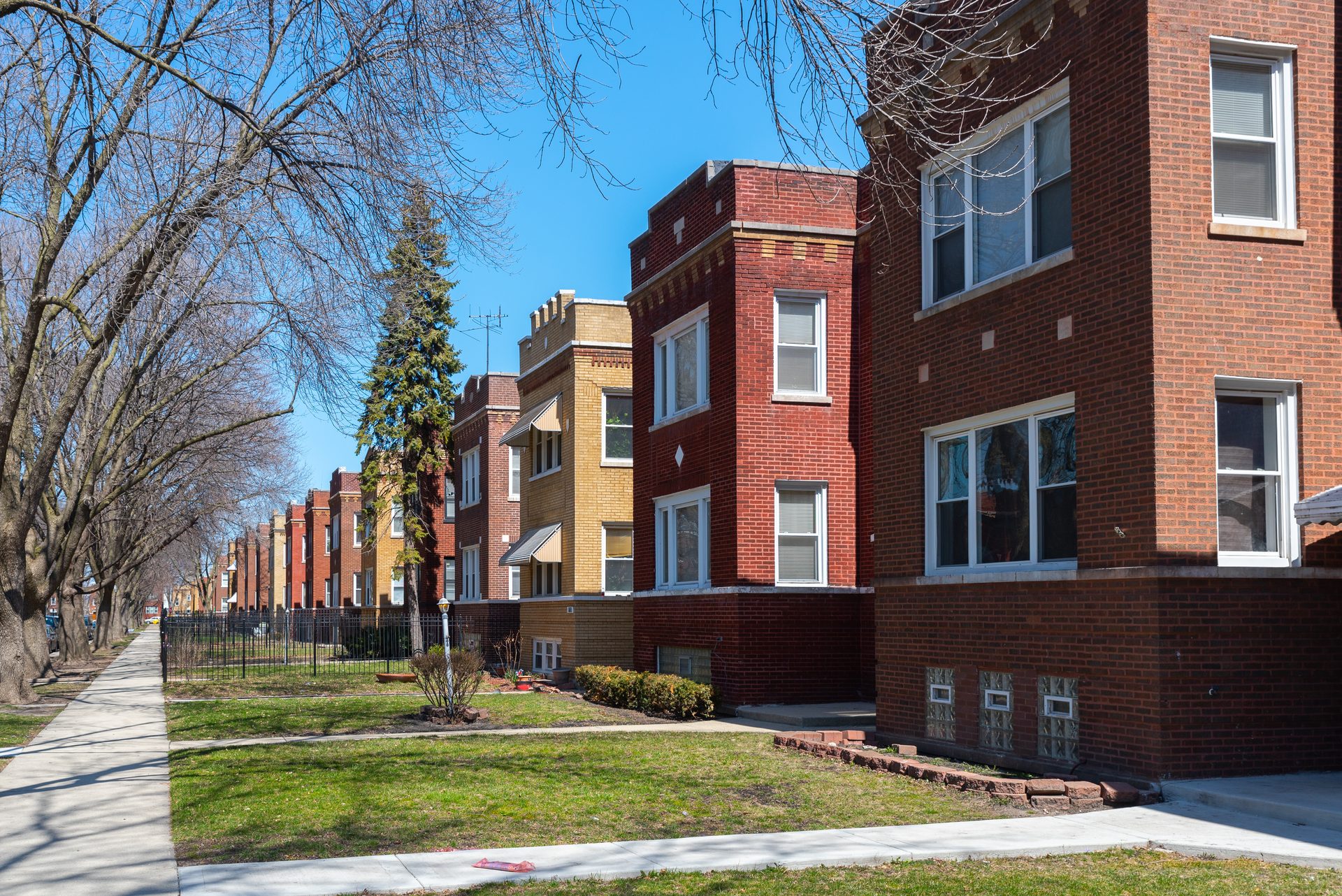
Move into neighborhoods with older housing stock, the classic brick two-flats, courtyard buildings, and bungalows, and the same money buys noticeably more space.
Transit access matters too. A home near an ‘L’ stop can be cheaper on a total-budget basis than a lower-priced one that forces you to keep a car.
Explore neighborhoods in person, compare listings block by block, and weigh commute, space, and price together.
Smart Ways to Plan (and Protect) Your Budget Before Moving
If you’re moving to Chicago, or planning to stay and trade up within the city, a few habits will keep your finances on track:
- Use the 30% rule as a starting point. Keep your housing payment near 30% of gross pay, then adjust for your own debt and savings goals.
- Estimate a full month of expenses before you commit. Add utilities, transit or car costs, groceries, and insurance to the housing figure. Never just the housing payment alone.
- Plan for winter. Heating bills and cold-weather gear are real line items in your first year.
- Protect your savings. Keep an emergency fund of three to six months of expenses before stretching for a pricier home.
- Visit before you choose. Spend time in each area at different times of day, and stay flexible about location until you’ve compared a few options.
The Bottom Line on Chicago’s Cost of Living
Chicago isn’t the cheapest city in America. It is one of the few big cities where the paycheck-to-price ratio still works, with higher-than-average housing costs balanced by moderate everyday expenses.
It’s an important decision, and the right neighborhood makes all the difference to your budget and your day-to-day life.
If you’re planning a move and want a straight answer about what your money buys across Chicago’s neighborhoods, Hayley Westhoff with The Westhoff Group helps buyers and sellers find the right fit every day. Reach out and let’s talk through your options.